Tell us about yourself and your path to Road to Recovery
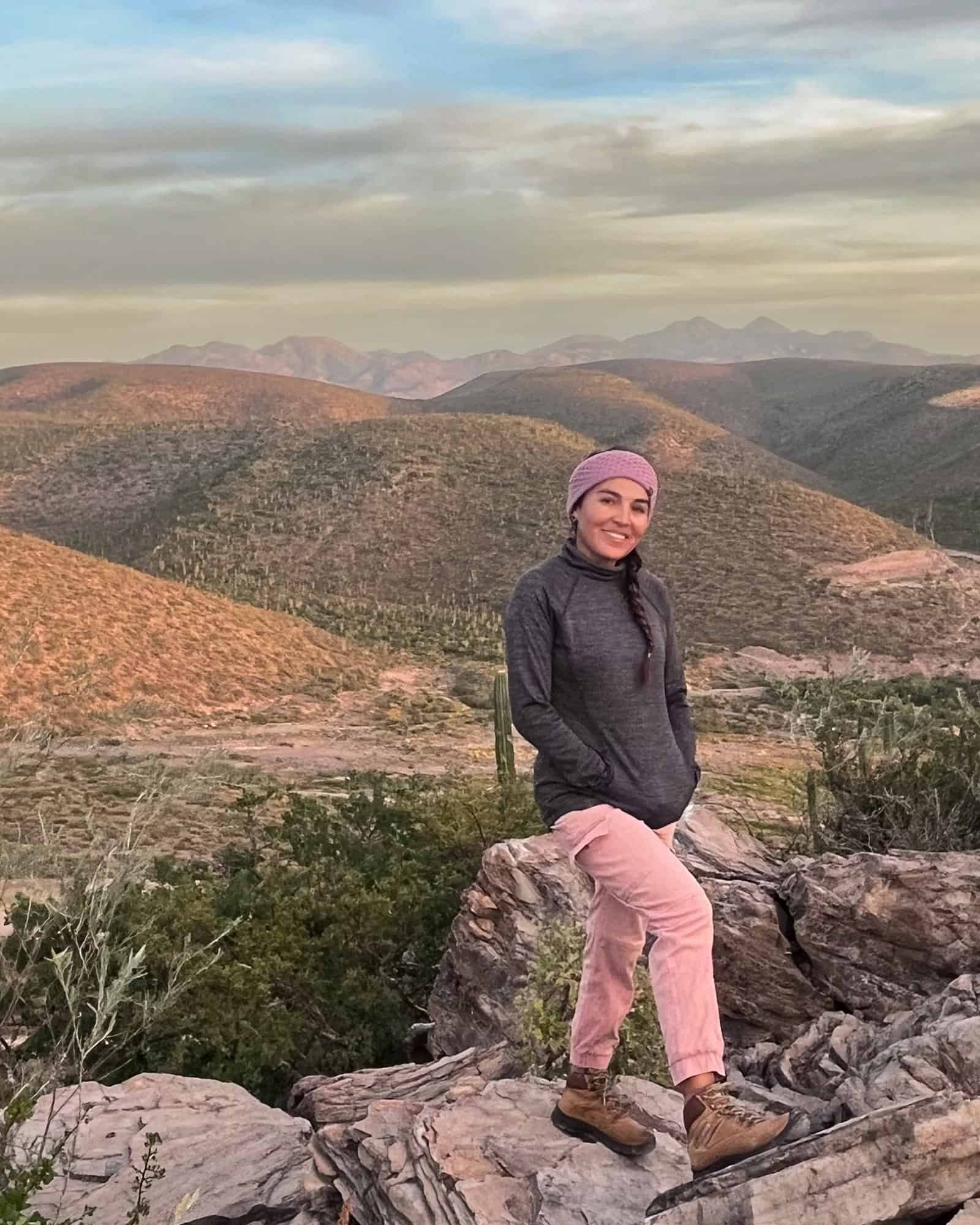
I’m the International Partnerships Coordinator at Road to Recovery. My path here wasn’t a straight line, and I’ve come to love that about it.
I studied biology with a focus on ecosystems and resource management, and then earned a master’s degree in marine sciences. Back then, I was sure my future was in marine invertebrates. I loved them, and I loved the intertidal zone (still do!). For my master’s thesis, I studied how commonly used pesticides in Mexico affect populations of aquatic invertebrates.
During that time, I started noticing the distance between what we discover through science and what is actually applied in the field and in policy. I wanted to help close that gap and make sure knowledge didn’t stay on paper. That is what drew me to conservation.
After my master’s, I joined Grupo de Ecología y Conservación de Islas (GECI) in Mexico for what was supposed to be a three-month job as a field biologist on seabird restoration projects. Those three months turned into six years.
After my first season monitoring seabirds, I returned as an island supervisor, and the following year I became a project coordinator. As my career grew, so did my love for seabirds. Our work included colony monitoring, diet and parental care studies, deploying and recovering tracking devices to identify foraging areas, and collecting biological samples.
A big part of my work was helping seabirds return to islands where invasive predators, such as cats, rats, and mice, had once been removed. The next step was to tell the birds that these islands were safe again. We did that through social attraction systems: playing back the calls of the species we hoped to attract, placing decoys, restoring nesting habitat, and installing artificial burrows. Then came the patient part: monitoring, measuring, comparing natural and artificial burrows, and learning what worked.
Tell us something interesting you have learned about the species you work with.
I’ve worked mostly with seabirds, and one thing that still amazes me comes from the Black-vented Shearwater. Nearly its entire population nests on a single island in Mexico: Natividad Island. There are thousands and thousands of burrows there. Yet each year, these birds return from the open ocean and find their very same burrow to nest again.
Every season, we recovered the Global Location Sensors (GLS) we had placed on their legs the year before, in the exact same burrows. Imagine flying across the ocean for months and coming home to the same small doorway among thousands. To me, that loyalty to place is one of the most beautiful reminders of why protecting these islands matters.
What gives you hope for the future of bird conservation?
What gives me hope is people choosing to work together. I feel it every time I’m in a meeting or a collaboration where different organizations, countries, and perspectives come together around the recovery of a species.
Working collaboratively is not the fastest path. Building trust, listening, and finding common ground take time. But I truly believe that when we walk together, we go further, and what we build lasts longer. So whenever I see people and projects commit to building those relationships, and to understanding each other, I feel hopeful.
Is there someone whose work has inspired you? Why?
During my undergraduate studies at UAM Xochimilco, I was lucky to have Dr. Marta Signoret as my advisor. She was a deeply respected and beloved researcher. She inspired me not only through her dedication to science, but through her humanity: her calm presence, her patience, and the way she took time to truly understand and connect with her students and colleagues. She showed me that how we treat people is as important as the work itself.
What is one lesson or message you would like to share with others in the R2R network?
One lesson I’ve learned, and keep relearning, is that conservation is much more about working with people than working with animals.
We can produce excellent biological science, and we need it. But in the end, what the birds will actually “feel” are the results of what we do as humans: the agreements we reach, the practices we adopt, the decisions we make, and the ways we think and behave.
That’s why I believe the relationships we build with each other are not a side task in conservation. They are the heart of it. Taking the time to listen, to understand someone else’s context, and to build trust is some of the most important conservation work we can do.